Google Ads

Monday, May 24, 2010

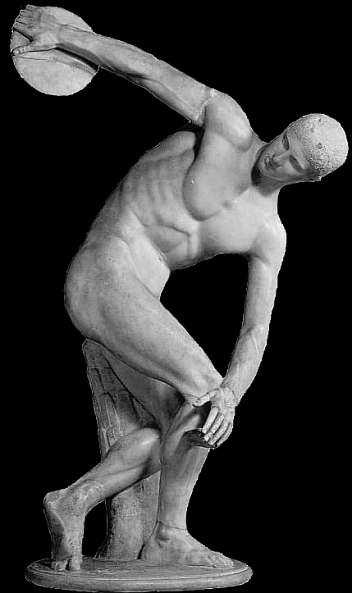
What is the perfect athlete?

What is the perfect athlete?

At Dynamic Training & Rehabilitation and through our Bogar Performance program we see a TON of atheletes.  Not just weekend warriors but extreme and hardcore athletes; from Professional Bodybuilders, Powerlifters, Hockey Players, and some extreme sports like Nascar Racing and Rock Climbing, we treat well over 100 athletes on a weekly basis.

Each athlete comes into our facility with the same goal in mind, to be injury free and with the vision of being the best athlete possible.

So, how do you help an athlete become the best? You unlock the potential to gain muscular endurance, strength, and in my opinion, the most important key is to be mechanical efficent and injury free.  Its amazing that one small injury can lead to any athletes downfall, no matter how mentally strong they are.  Being injury free allows for every muscle, tendon and ligament to work as hard as possible leading to amazing results, including major muscle strength and gains.

At BP and DT&R, we follow many Manual Osteopathic Princples and treatment methods to achieve our goal. When an athlete walks into my room, I make sure there are no adhesions and blockages that will prevent stimulation to peripheral tissue.  By doing this, I can make sure my treatments are effective and you will see results immediately.

I will also asses for fascial adhesions and glide, and arterial flow to different tissues. Our tissue needs proper nutrition and flow to repair.

So how do you become the perfect athlete?

Send an answer to me via email and can win free assesment!

info@dynamictraining.ca

Thursday, May 13, 2010

Why do I recomend all my athletes/patients use Arnica Tablets?

I am a big believer that therapy and rehab is up to 50% nutrition. We need to heal ourselves from the outside in, and inside out. Our bodies need to be able to accept the change that we are bringing into it.

Recomend supplements and nutritional componants that help with treatment is fish oil, antioxidents and flavonoids, grape seed extract, and lean protein sources.

There is one supplement I recomend everyone of my high endurance athletes take on a daily basis and that is ARNICA TABLETS. If you are one of the many athletes that work with me on a treatment base, than you know the multitude of benefits this product has.

Arnica is made from a yellow daisy-like flower. Arnica has many uses both for internal and external application. For a therapeutic base, we use arnica to control swelling, manage pain, alleviating acute strains and sprains, control scar tissue formation, and decrease bruising after deep tissue and fascial work.

How Does it  work? - arnica stimulates white blood cell activity, which leads into dispurtion of congested blood and trapped fluids from muscles and joints. It also has an anti-bacterial componant.

Arnica is used widely in my practice and within our athletes to help take them to the next level of therapy and performance. We use arnica in conjuction with Foam Rolling and activation dills prior to excercise to alleviate pain, and decrease muscular adhesions.

This is an educational blog. Consult your Health Care Practitioner before before starting any nutritional or therapeutic program.

Sunday, May 9, 2010

Alternative Therapies and Muscle Growth: SMFR

If you are reading this blog, you will know of my niche of helping ahtletes perform better and pain free through alternative health care. Focusing on soft tissue work, and an efficent body, we can unlock adhesions allowing strentgh athletes become stronger! At BP, we have an online therapy program that allows athletes from all over the world become exposed to these results. The purpose of this blog is to show how our techniques of SMFR can stimulate muscle growth.

I get the question every day: "how can a therapist or doctor increase muscle growth?"

Simple! - unlocking tissue adhesions in myofascial meridians.

Fascia is a type of tissue found in the body that surrounds every bone, muscle, organ the body. We have general and specific fascial chains. Here, we are focused on the general fascia that surrounds or muscle tissue.

If we have a piece of scar tissue or adhesion the fascia or between the fascia and muscle, the muscle will recieve less stimuli, poor vasular or nutrition, and will create friction, this causing ain and dysfunction.

Utilizing techniques like Graston, SAST, Active Release and foam rolling can break down these adhesions and create a smooth glide between tissues, proper stimuli, bllod flow and lymphatics to the tissue.

Keep posted to this blog and learn more on how alterntive therapy can imporve your perform and decrease pain.


You asked and here it comes:

As of this past week, Eric Daye from TRUBBody Fitness  and myself are putting together a SMFR and Activation series on DVD and online with pictures to help athletes do prep work and therapy correctly. Keep posted for this new series to be released.


SMFR - Self Myofascial Release

Saturday, May 1, 2010

MD Tv: The proccess of rehabing a professional bodybuilder

Last week, Rob Durand from Muscular Development magazine trecked from Newyork to toronto to cath the behind the scenes of a professional bodybuilder.

Part of the film was the rehab process of Professional Body Builder and Canadian Champion Fouad Abiad. Our goal during the rehab session is to break down fascial adhesions, facilitate muscle, and to help with nutrition.

Click below to watch the full video:

http://mdtv.musculardevelopment.com/lifestyle/2917-sacrfice-without-regret-fouad-abiad-rehab-.html

Sunday, April 4, 2010

Soft Tissue work for Athletes

Many athletes have realized the value of soft tissue work through massage, Active Release, or Graston/SASTM. Soft tissue work is any modality that improves the quality of the soft tissue which is comprised of muscles, fascia, tendons, ligaments and even joint capsules.

What exactly is soft tissue quality? Essentially, it is the condition or ability of the soft tissue to function in an optimal, pain free manner; to perform smoothly in other words

When we train/exercise/move we often times create mini-trauma to our soft tissue in the form of micro tears in the various components of soft tissue. This is part of the training process and results in the tissue healing, growing and getting stronger. But frequently there is also some scarring and adhesions that occur as well and these impede function and performance. In essence, you get knots and damaged tissue matrixes in your soft tissue and the soft tissue can't perform as smoothly and efficiently as it would without these impediments.


Soft tissue work, especially if done regularly and immediately, serves to improve tissue quality as well as improving the extensibility of the soft tissue. Extensibility is the capacity of the soft tissue to lengthen properly. By immediately, I mean doing soft tissue work as a regular part of your exercise regimen will help improve your tissue quality. If you wait until pain or discomfort if felt you are facing that much more of a challenge.

Currently, IFBB professional bodybuilder Fouad Abiad, is travelling to Adam Bogar in Burlington, Ontario to recieve soft tissue manipulation and acupuncture to keep healthy and be the top of his game!

Below are pictures are some pictures of Fouad's last soft tissue treatment. We are breaking down soft tissue and myofascial adheasions to increase blood flow, muscle size/density, and neuromuscular contraction to the muscle.


Keep posted for more of Bogar Performance athletes and there treatments and science behind treatment and soft tissue procedures.

Monday, February 22, 2010

What do Olympians do after the games?

This is one of my favorite times of the year is when I get the see athletes that have worked for over 4 years, competing on the world stage, for their country. At Dynamic Training & Rehabilitation and Bogar Performance Institute, we work with over a dozen high performance olympic athletes, mainly in the prehab and injury prevention division.

I am going to shift away from the Vancouver 2010 Olympic Games and talk about the next two years, leading up to the 2012 summer games in London, England.

This past weekend, I sat down with one of our summer games medal contendor, talking, planning, and asses the last 2 years, and the next 2 years leading up to London. We watched every piece of video tape, mapped out a plan, and asses everything from her toes to her head so we could make a plan leading into the next summer games.

We created a strength plan with the athletes sports and conditioning coach with an biomechanic assesment plan I put together.

Now, we are on the road to an alternative health care plan that utilizes massage therapy, osteopathic techniques, Acupuncture, Active Release Therapy, and chiropractic adjustments.

Keep posted to this blog as we will continue to write, take pictures, and have progfress repots about one of our athletes that will be podium bound in 2012!

Sunday, February 7, 2010

The True Source of Knee Pain

I would like to start of this blog on the right foot and talk about a problem I see everyday, with every patient..........knee pain or dysfunction!

There is a lot of controversey on the web and in journals regarding athletic performance and knee issues. Most writers and Sports Conditioning Specialist/Personal Trainers tend to argue that the true componant of knee pain and dysfunction starts at the VASTUS MEDIALIS or commonly known as the VMO.

The purpose in todays blog post is to give you some insdies ideas and point of views that will hopefully open your way of training and increase overall performance and education on a very broad topic: Knee Dysfunction.

Through my practice and clinical setting, 90% of knee complaints recieved have an altered Popliteus Muscle upon Orthopeidic Testing, Palpation, and Strength Testing.

Let's first get into anatomy:


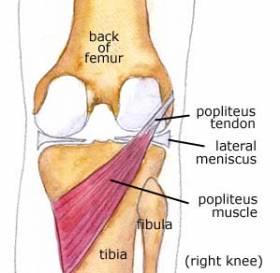
The popliteus tendon originates on the lateral surface of the lateral femoral condyle (in front of and below the lateral collateral ligament origin) and also from the fibular head. It also has an origin stemming from the posterior horn of the lateral meniscus. The tendon then courses under the lateral collateral ligament, descends into the ‘popliteal hiatus’, and becomes extra-articular (outside the knee joint) before joining its muscle belly. It inserts into the tibia above the popliteal line. It is therefore a relatively horizontal muscle lying deep in the back part of the knee.

The popliteus is believed to have a number of functions, made possible by its unique ability to reverse its origin and insertion, depending on whether the femur or the tibia is fixed.


1.Internal rotation of the tibia in an already extended knee. Due to the contour of the femoral condyles, this internal rotation of the tibia ‘unlocks’ an extended knee. In essence it initiates knee flexion.

2.External rotation of the femur on a tibia that is fixed, as in the stance phase of gait. It is an important controller of knee rotation during the stance phase of locomotion.

3.Helps to bring the knee out of a position of full extension.

4.Helps the PCL (posterior cruciate ligament) maintain stability by preventing excessive posterior translation of the tibia.

5.Helps to withdraw the lateral meniscus during knee flexion.

6.Provides some rotary stability of the femur on the tibia.

7.Prevents excessive external rotation and varus rotation of the tibia during knee flexion
 
In short, a popliteus that is tight and in spasm will cause a number of problems. The most significant of these is lack of full knee extension and lack of external rotation of the tibia on the femur. Both these movements will be affected by a tight popliteus that has a high resting and active level of muscle tone. Why does the popliteus exhibit increased reactive muscle tone? There are three main possibilities.
 
A tight popliteus has been shown to alter gait, therefore increasing pressure and force through the knee joint.
 
To many authors and therapist, the popliteus may be known as the "fifth ligament". In my opinion this assumption may be true becuase of the ramifications that this muscle will of on surrounding structures of the knee. One of the most obvious roles in altered biomechanics that the popliteus will inhibit is the VMO or Vastus Medialis Muscle. When the popliteus muscle is tight and spasm, it will cause a lateral translation of the Tibia. This is when the Tibia is pulled lateral on the femur. The result action of this translation will cause an inhibitation of the VMO Muscle, one of the important patella tracking muscles.
 
Treating Options:
 
After reading this article, you may ask: "Well, what do I do about it?"
 
1) Myofascial Rolling
 
Do this prior to every workout? Focus on working all superficial fascial chains in the body
 
2) Self Tissue Release or Massage with Ischemic Compressions\
 
Whenever you are sitting watching tv, at the computer or in bed, just go ahead and massage the little muscle. Get it losse, and free of any adhesions that may be hindering the muscle
 
3) Dynamic Activivation:
 
Perform Dynamic Activation Drills along side your foam rolling prior to each workout.
 
Other Therapies and recomendations:
 
I always suggest to recieve a full functional assesment by a health care professional. When an issue like popliteus causes enough dysfunction, pain, and altered gait, it is in my opinion that it is changing a handful of other structures that act on the knee, hip, ankle, and low back areas.
 
A few benefitial therapy tools:
 
- Contemporary Medical Acupuncture
- Active Release Techniques (A.R.T)
- Graston or SASTM Myofascial Release
- Osteopathic or Chiropractic Techniques
 
As a practitioner with a background in Osteopathy and Soft Tissue Dysfunctions, I do not solely believe that the Popliteus is the one aspect of knee pain, but may be a source, or a symptom of another dysfunction in the human body. The purpose of this blog post was to educate exercise enthusiest in other reasons why knee pain may persist. Major imbalance in the hip, low back, and ankle will also cause nociceptive fireing or pain in the knee.

To learn more on knee pain and exercise, keep posted to this blog or you may contact adam directly at adam@dynamictraining.ca

Disclaimer:

Please be advised that there are risk invloved in participating in any exercise program. By Participating in the Demand of Corrective Exercise and Fitness classes, members or participants are assuming all risks of injury that may result. Bogar Performance and Dynamic Training & Rehabilitation, our Therapist, Trainers, and our third parties shall not be liable for any claims for injuries or damages whatsoever, resulting or connected with the use of this blog and website. We further disclaim any liability caused by intentional or unintentional negligance.

The sole purpose of this blog is to be an education resource for trainers, therapist, and workout enthusiast. Pleas seek a Health Care Provider prior to starting any exercise program and therapy.